• Request Info
  • Visit
  • Apply
  • Give
  • Request Info
  • Visit
  • Apply
  • Give

Search

  • A-Z Index
  • Map

Chemistry

  • About
    • Student Organizations
    • Connect With Us
    • Careers With Us
    • Employee/Student Travel Request
  • Undergraduate Students
    • Majors and Minors
    • First Year Students
    • Undergraduate Research
    • Summer Programs
    • Chemistry Lab Excused Absence
    • Apply
  • Graduate Students
    • Prospective Students
    • Admitted Students
    • Current Students
    • Chemistry Graduate Student Handbook
  • Faculty
  • People
  • Research
    • Research Areas
    • Facilities
    • SMLQC 2025
  • News
  • New Chemistry Building
Home » Archives for July 2024

July 2024

Archives for July 2024

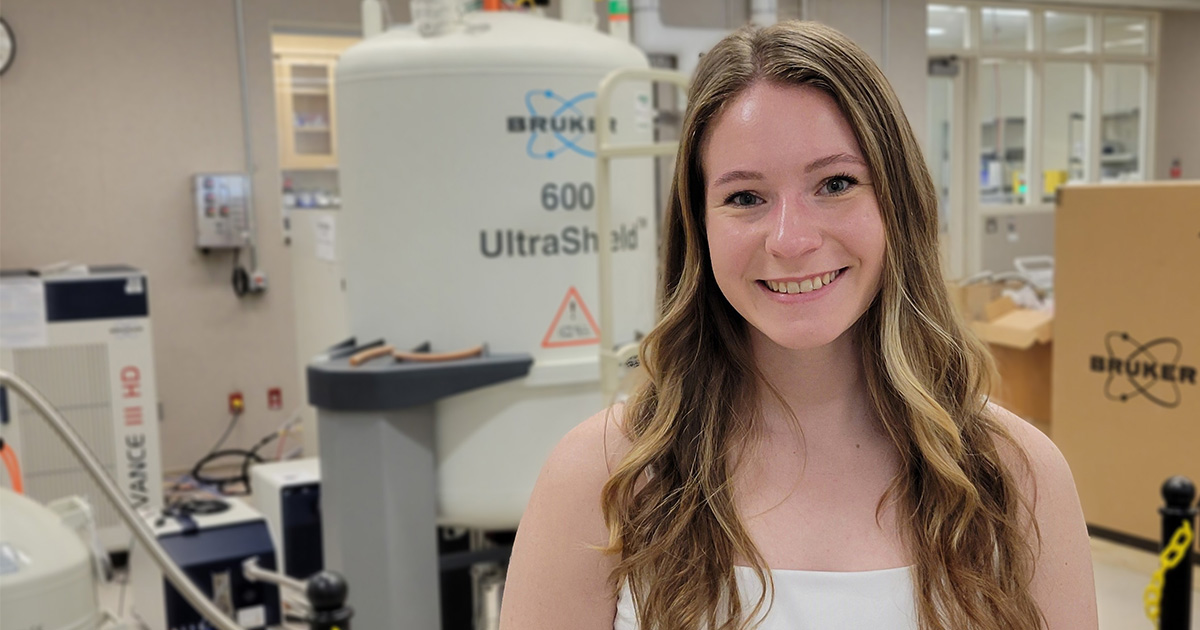
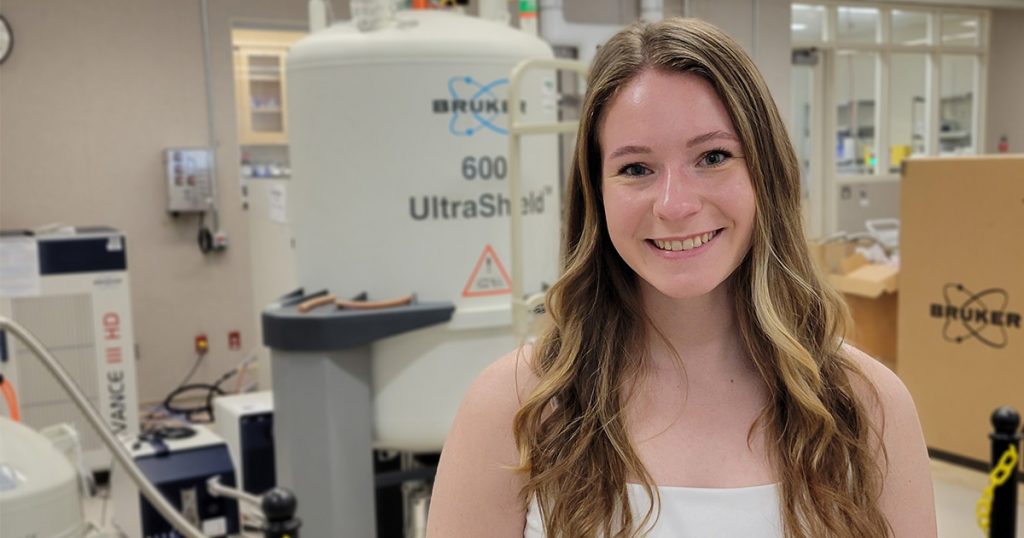
A woman standing in a chemistry lab

Graduate Student Earns Prestigious ACS Fellowship
July 30, 2024 by Jennifer Brown

Miranda Limbach, graduate student in the Department of Chemistry, was chosen as one of four recipients of a 2024 American Chemical Society Analytical Graduate Research Fellowship.

A member of Assistant Professor Thanh Do’s research group, Limbach is currently finishing a summer internship with Merck. When she returns, Limbach will begin her fifth year of graduate studies at the university.

The goal of Limbach’s PhD research is to identify the underlying principles governing the membrane permeability of macrocyclic peptides. Macrocyclic peptides are being explored as a means of drug delivery that would target protein-protein interactions, potentially leading to new ways to treat a variety of diseases.

This prestigious fellowship awarded by the Analytical Division of the ACS is designed to support research, promote the growth of the discipline, and to recognize future leaders in analytical chemistry. The award will provide support to Limbach for 9 months, which will allow her to focus fully on her research without holding a GTA position.

Other winners of the nationally competitive award are from the University of Wisconsin-Madison, Florida State University, and the California Institute of Technology.

The American Chemical Society (ACS) was founded in 1876 and is one of the world’s largest scientific organizations. In addition to hosting regular conferences devoted to exploring new and continuing research across the discipline of chemistry, the ACS provides accreditation for undergraduate chemistry degrees, offers a variety of fellowships and awards for students and researchers, and publishes more than 80 peer-reviewed journals.
Filed Under: Analytical Chemistry, Graduate Student Spotlight, Graduate Students, News

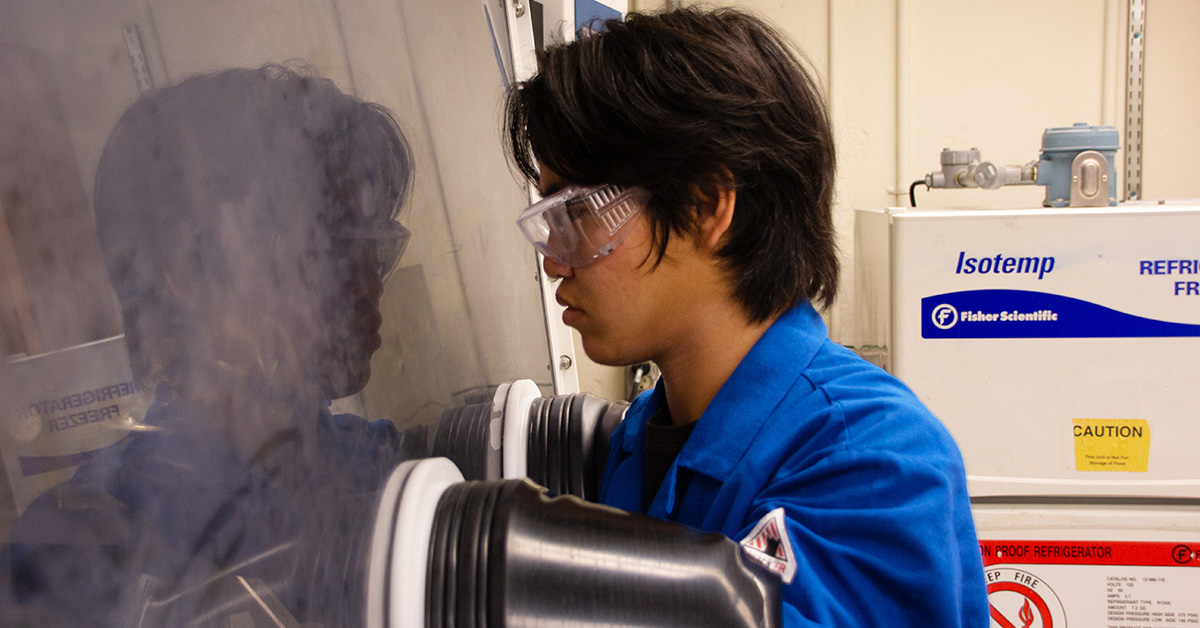
A young Asian man wearing a blue lab coat and clear safety glasses is using a glove box in a lab. A shadow of his image is reflected in the glove box window

Baccile’s Grant Prepares Community College Students for Four-Year Programs

July 9, 2024 by Jennifer Brown

A young Asian man wearing a blue lab coat and clear safety glasses is using a glove box in a lab. A shadow of his image is reflected in the glove box window

Joshua Baccile, assistant professor in the Department of Chemistry, is leveraging a National Science Foundation (NSF) grant to provide summer research opportunities to community college students. He hopes the program will encourage more students to pursue a four-year degree.

The NSF requires all submissions to not only detail the proposed research, but to address the broader impacts of that research. NSF broader impacts are described as tangible societal benefits that go beyond the research’s contribution to the greater body of knowledge, and ensure that publicly funded research contributes to a public good.

Baccile addressed the broader impact question in his proposal by creating a summer research internship for community college students who are interested in pursuing a bachelor’s degree in chemistry or a closely related field. His goal was to tailor a comprehensive research program that would provide hands-on experience and professional development opportunities, and help ease the transition from community college to a four-year program.

“This program is important to me because I started out in community college. There is often a bit of a gap between the skills developed in a two-year program and the skills needed to succeed in a four-year program,” said Baccile. “When I was an undergraduate student, my summer research experience was critical to my continued pursuit of chemistry and I wanted to create an opportunity like that for our local community college students.”

To get the program running, Baccile had to first build a relationship with local community colleges and establish a pool of interested students. He reached out to Pellissippi State Community College (PSCC) via a colleague and visited the campus repeatedly to discuss the program with the college’s organic chemistry students. When the program began accepting applications, the response from students was overwhelmingly positive.  

“In the first year, we had a number of qualified applicants that we were forced to turn down because I simply didn’t have room for them in my lab,” said Baccile. “It was immediately clear this is an opportunity students want.”

Now in its second year, Baccile’s program has expanded beyond his own lab to include the research groups of Mike Best and Johnathan Brantley, fellow faculty members in the chemistry department. The addition of these labs has allowed the program to support more qualified students, a trend Baccile hopes to continue.

He notes that, thus far, all of the students who have participated in the summer internship program have gone on to four-year institutions in Tennessee, including UT’s chemistry department.

“This program is establishing pathways to four-year degree programs for Tennessee residents through research experiences. Not only is this helping individual students expand their future opportunities, it’s directly contributing to the state’s workforce development goals,” said Baccile.

Chemistry is a growing industry in the state of Tennessee. In the last six years, industry partners have made investments in excess of $400 million and created more than 2,000 jobs. Qualified and capable chemists will continue to be in-demand in Tennessee for the foreseeable future, and Baccile strongly believes that research experiences directly impact whether a student continues to work in the field of chemistry.

“My undergraduate summer research experience is the reason I’m a chemist,” said Baccile. “I think early exposure to research significantly improves the chances of students discovering their own passion for chemistry, and I am dedicated to extending the same invaluable opportunity I benefitted from to current and future community college students.”

The NSF proposal that funds Baccile’s summer research program has one year remaining. However, he hopes to find a way to continue and even expand the program into something more permanent in the future.

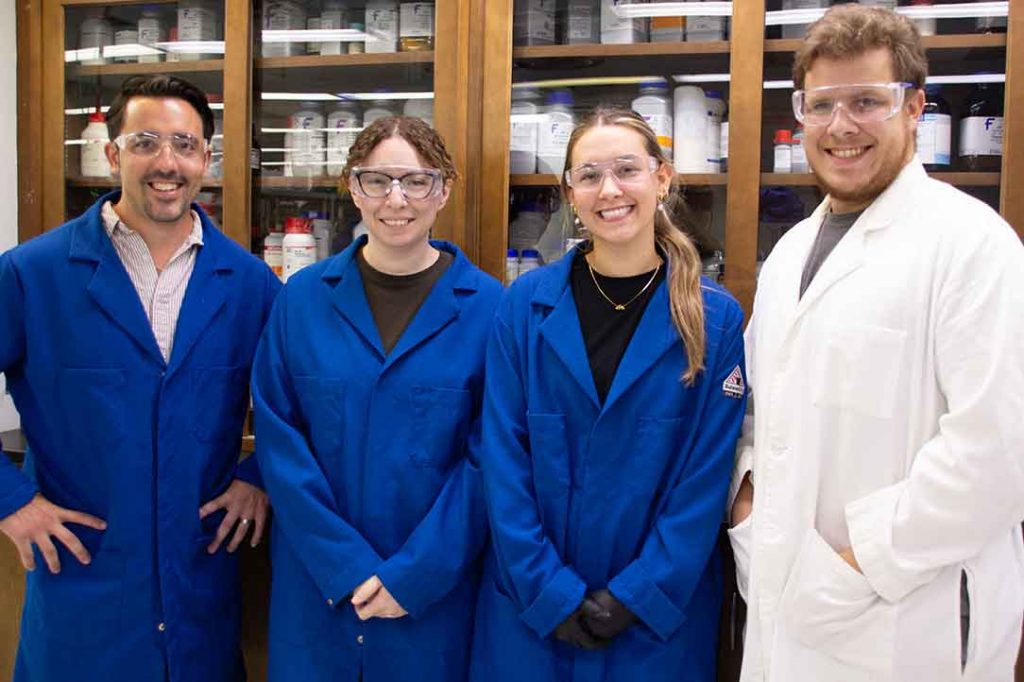
Dr. Baccile and graduate student Zack Hulsey stand with two young women in front of a case of lab supplies. They are wearing lab coats and safety glasses and are all smiling.
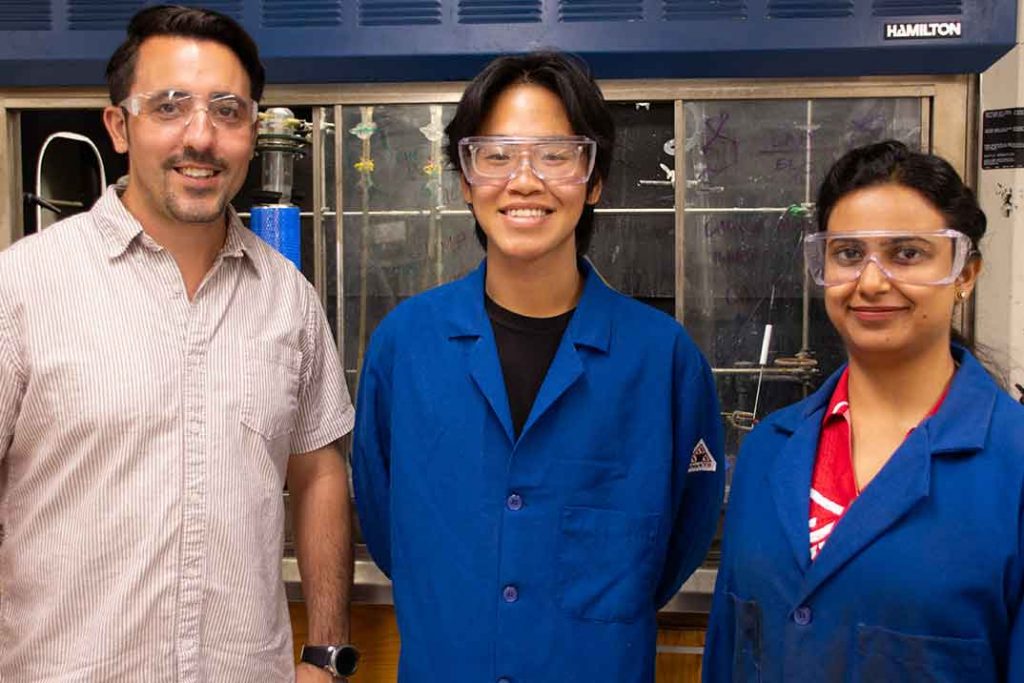
Dr. Baccile and graduate student Hima Davit stand with a young male student. They are smiling.
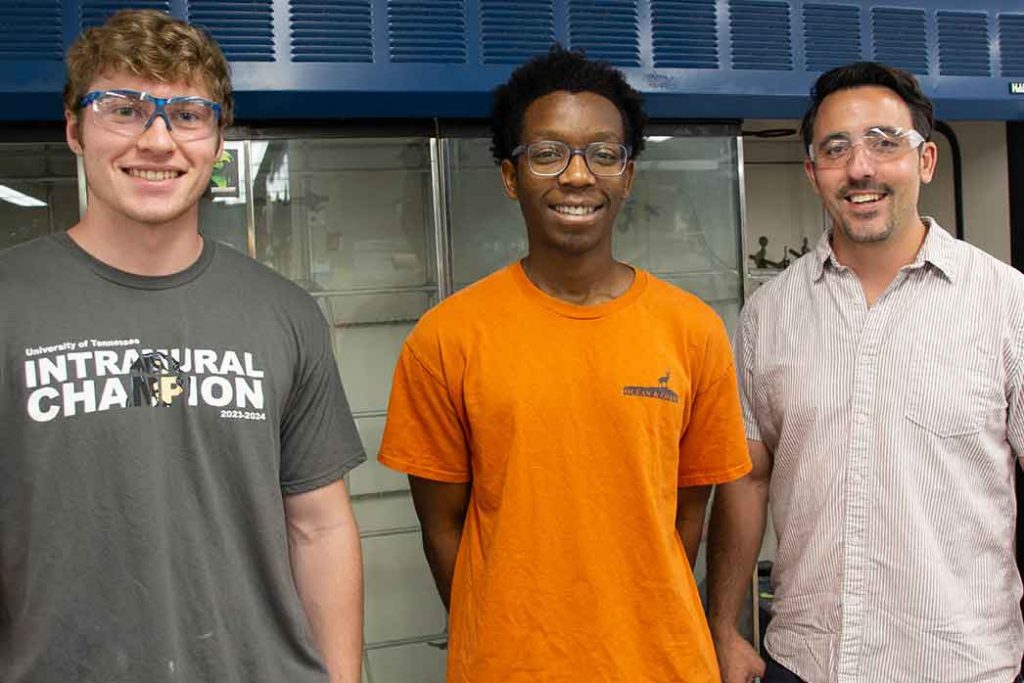
Dr. Baccile and graduate student Robert Maraski stand with a male student in front of a glove box. They are smiling.

Filed Under: News, Organic Chemistry Tagged With: Baccile

Chemistry

College of Arts & Sciences

552 Buehler Hall
1420 Circle Dr.
Knoxville, TN 37996-1600

Email: chemistry@utk.edu

Phone: 865-974-3141

Facebook Icon  X Icon  Instagram Icon  YouTube Icon LinkedIn Icon

The University of Tennessee, Knoxville
Knoxville, Tennessee 37996
865-974-1000

The flagship campus of the University of Tennessee System and partner in the Tennessee Transfer Pathway.

ADA Privacy Safety Title IX