• Request Info
  • Visit
  • Apply
  • Give
  • Request Info
  • Visit
  • Apply
  • Give

Search

A-Z Index Map

Chemistry

  • About
    • Student Organizations
    • Connect With Us
    • Careers With Us
    • Employee/Student Travel Request
  • Undergraduate Students
    • Majors and Minors
    • First Year Students
    • Undergraduate Research
    • Summer Programs
    • Chemistry Lab Excused Absence
    • Apply
  • Graduate Students
    • Prospective Students
    • Admitted Students
    • Current Students
    • Research Open House
    • Chemistry Graduate Student Handbook
  • Faculty
  • People
  • Research
    • Research Areas
    • Facilities
    • SMLQC 2025
  • News
  • New Chemistry Building
Home » Page 6

Archives

Polymer

UT Leads World in Polymer Science

July 6, 2022 by chemweb

From your clothing to the fiber-optic cables bringing you high-speed internet, polymers are everywhere, with applications in nearly all fields of science and industry. Polymer science plays a crucial role in providing solutions to global needs including food, clean and abundant water, air, energy, and health.

Researchers at the University of Tennessee, Knoxville, in fields including chemistry, physics, chemical engineering, biosystems engineering, and forestry are investigating polymers through a variety of fundamental scientific problems with real-world impact—from designing and creating new advanced materials to improving industrial processes to creating sustainable biofuels.

As an indication of the significance of their work, UT has been ranked the top global university for polymer science in U.S. News and World Report’s Best Global Universities. The ranking is based on research performance from 2015 through 2019 as well as citations from publications through April 29, 2021.

Polymer science research within UT’s College of Arts and Sciences includes work being conducted by the research group of UT-ORNL Governor’s Chair for Polymer Science Alexei Sokolov. The team is advancing fundamental understanding and design of novel polymeric materials for various current and future technologies—from gas separations and carbon capture to 3D printing.

Sokolov’s group also works on polymer electrolytes for use in new generations of solid-state batteries and other energy storage technologies.

“We are working on polymers with dynamic bonds that are recyclable and have self-healing ability,” said Sokolov. “These polymers might replace current plastics and drastically reduce pollution.”

Another area of focus, led by the research group of Associate Professor of Chemistry Brian Long, is creating new synthetic materials to separate greenhouse gases such as carbon dioxide from nonharmful gases in a more energy-efficient and cost-effective manner. This research has shown tremendous promise, with implications for reducing industrial greenhouse gas emissions.

“Think about what your body is touching right now—your clothing, your chair, your phone or computer. What are you touching that’s not a polymer or that doesn’t contain polymers? Polymers have provided solutions to almost every societal need in modern human history—even the DNA, RNA, and proteins in our body are polymers,” said Long.

Researchers at UT are even tackling one of the most pressing global needs today—how to minimize or eliminate waste plastics in the environment. For example, research efforts led by Professor Mark Dadmun and Assistant Professor Johnathan Brantley seek to develop new chemical methods to aid recycling of waste plastics, improve the properties of new products and materials made from mixed plastic waste streams, and create a circular plastics economy.

Commenting on the announcement of the ranking, Vice Chancellor for Research Deborah Crawford said, “Our researchers deserve this recognition for their work advancing our understanding of polymers and how they can contribute to making life and lives better. At UT, our commitment is to contribute to the creation of a more just, prosperous, and sustainable future through world-class research and scholarship. Our polymer scientists and engineers are doing just that!”

About the ranking

The polymer science ranking is determined by 10 indicators, including the impact of citations and research publications. Impact is calculated based on data from the Clarivate Web of Science, a web-based research platform. The Web of Science is a web-based research platform that covers more than 21,100 of the most influential and authoritative scholarly journals worldwide in the sciences, social sciences, and arts and humanities.


Filed Under: Polymer Chemistry

water jug

UT Professors Investigate Solutions for “Forever Chemicals”

June 22, 2022 by chemweb

University of Tennessee, Knoxville faculty members Shawn Campagna, professor and associate department head in chemistry, and Frank Loeffler, Governor’s Chair professor in microbiology, have made a discovery that could lead to new capabilities for managing environmental contamination.

Commercially used per- and polyfluoroalkyl substances (PFAS) were developed in the 1940’s and made their way into a variety of common household products. Today, PFAS are used for plastic and rubber manufacturing and in food wrappers, umbrellas, firefighting foam and more.

PFAS have also been called “forever chemicals” due to their resistance to breaking down in both the environment and the human body. PFAS have been discovered lingering in rivers, Arctic sea ice, human breast milk and in the blood of 97% of Americans. Most troublesome is their potential impact on human health and PFAS have been linked to metabolic disruption, obesity, diabetes, immune suppression, and cancer.

Loeffler and Campagna’s work, recently published in Environmental Science and Technology, explores a potential avenue for decreasing broad contamination with these chemicals. Their team found that a naturally occurring soil bacterium, Pseudomonas sp. strain 273, was capable of degrading and detoxifying 1,10-difluorodecane, a fluorinated compound that could be a model for dealing with PFAS. Surprisingly, this bacterium was also able to use the fluorine containing byproducts to build lipid bilayers, or cellular membranes, which indicates that we don’t yet know all that we should about the fate of this type of compounds in biological systems.

“This research is important since fluorinated organic chemicals are emerging contaminants, and we do not yet know how and if they enter the food web,” said Campagna. “The fact that bacteria can incorporate breakdown products of these molecules into their biomass indicates that we don’t fully understand the environmental impact of these contaminants.”

This discovery developed from a long-standing series of collaborations between Campagna and Loeffler and leverages the capabilities of both the Center for Environmental Biotechnology and the Biological and Small Molecule Mass Spectrometry Core.

“There is a pressing need to demonstrate that natural degradation processes for PFAS exist – that they are not forever chemicals,” said Loeffler. “The new findings emerged through collaborative efforts at the interface of disciplines, specifically environmental microbiology and analytical chemistry. My group obtained and characterized the unique microorganism, and Dr. Campagna’s group had the instrumentation and expertise to perform the analytical procedures. The results are a product of teamwork and neither group individually would have succeeded.”

Campagna and Loeffler hope their work can lead to further discoveries of bacteria capable of degrading the entire range of fluorinated pollutants, which could lead to removing PFAS from contaminated areas like drinking water.

As part of the bipartisan infrastructure law funding initiative, the U.S. Environmental Protection Agency is making available $1 billion in grant funding, the first of $5 billion through the law. This initiative aims at reducing PFAS in drinking water specifically in communities facing disproportionate impacts.

Both Loeffler and Campagna have been contacted by the Tennessee Department of Environment and Conservation (TDEC) regarding state mandated PFAS monitoring in drinking water. Their capabilities are facilitating statewide efforts to improve the quality of life for all residents of the state of Tennessee.

Filed Under: Campagna, Organic Chemistry

One-way Optical Transparency at Telecommunications Wavelengths

June 17, 2022 by chemweb

Filed Under: Musfeldt

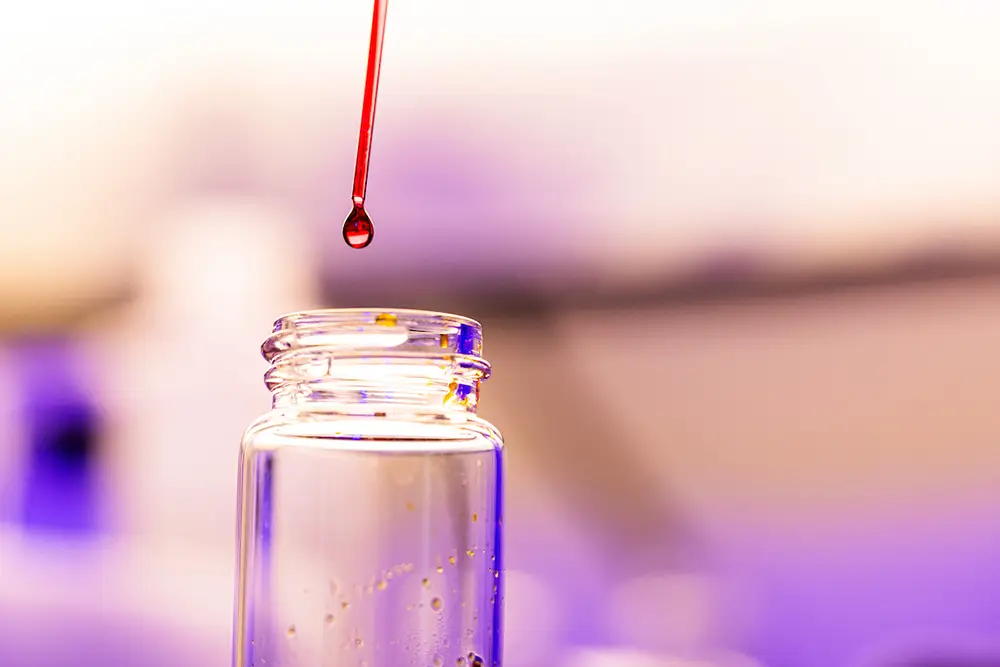
Detail photo of a solution droplet on the end of a glass dropper before going into a glass vial in the Polymer Characterization Laboratory for a research photo created on January 19, 2023. Photo by Steven Bridges/University of Tennessee.

Brantley Group Published in JACS

May 21, 2022 by chemweb

Detail photo of a solution droplet on the end of a glass dropper before going into a glass vial in the Polymer Characterization Laboratory for a research photo created on January 19, 2023. Photo by Steven Bridges/University of Tennessee.

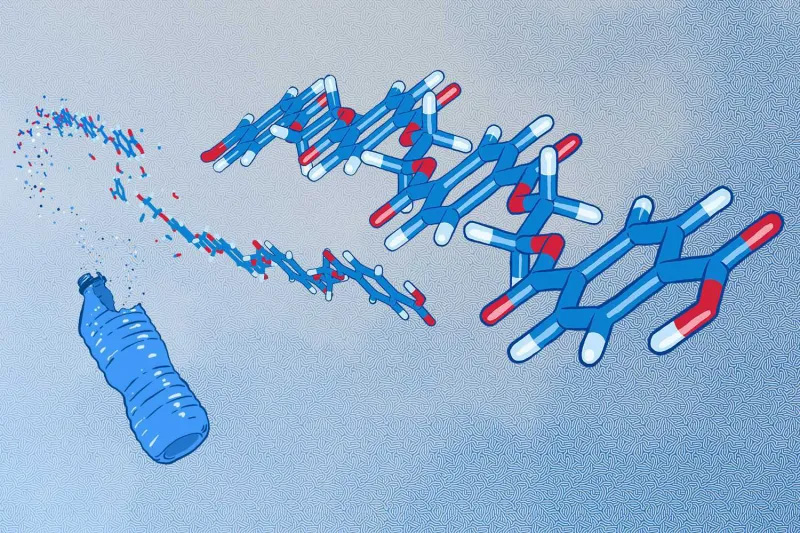
The Brantley group recently published a paper in JACS entitled “Electroediting of Soft Polymer Backbones” Alan Fried, Breana Wilson, and Nick Galan contributed to the research, under the supervision of Johnathan Brantley.

The paper discusses new methodology for degradation and functionalization of olefin-containing polymers through electrochemistry. This method can be carried out in both homogeneous and heterogeneous systems, in addition to using mild conditions and being experimentally simple.

The work was completed in memory of Alan Fried.

Filed Under: Brantley, Polymer Chemistry

Dai #64 in the World’s Chemist Ranking

April 18, 2022 by chemweb

Filed Under: Uncategorized

Do Wins National American Society for Mass Spectrometry Award

March 22, 2022 by chemweb

Filed Under: Uncategorized

Best Group Publishes ATP-Responsive Liposomes in JACS

February 23, 2022 by chemweb

The research group of Michael Best in Tennessee Chemistry, led by graduate student Jinchao Lou, recently published an article describing the development of ATP-responsive liposomes in the Journal of the American Chemical Society. The nanocarriers reported in this work show strong prospects for enhancing clinical drug delivery applications.

Liposomes are highly effective nanocarriers for therapeutics due to their ability to encapsulate drugs with wide-ranging properties and enhance their circulation and delivery to cells. However, their potential could be improved by achieving control over the release of cargo to maximize drug potency and diseased-cell selectivity. While liposome-triggered release represents a vibrant field of research due to this significance, the toolbox for controlling liposome release remains limited and prior strategies face many challenges that obstruct clinical application.

The Best Group has explored a new paradigm for triggered release in which cargo escape is triggered only when liposomes encounter specific small molecule metabolites that are overly abundant in disease states. This is achieved using synthetic stimuli-responsive lipid switches designed to undergo programmed conformational changes upon the binding of small molecule targets, events that compromise membrane packing and thereby drive release.

In this work, Lou and co-workers developed liposomes that selectively respond to ATP over eleven other structurally similar phosphorylated small molecules. ATP is a critical target for metabolite-mediated drug delivery since this molecule is a universal energy source that is known to be heavily upregulated in-and-around cancer cells. This opens up the potential for selective drug delivery and release driven by overly abundant ATP associated with diseased cells.

This project also entailed a collaboration with the group of Dr. Francisco Barrera in the Tennessee Biochemistry & Cellular and Molecular Biology (BCMB) Department. Through cellular delivery and fluorescence imaging experiments, graduate student Jennifer Schuster showed that modulation of cellular ATP levels using drugs led to direct control of cellular delivery of ATP-responsive liposomes. These results demonstrate the key advancement that liposome delivery can be modulated by the cellular abundance of ATP.

A provisional patent has been filed for this ATP-responsive liposome technology. Additionally, the Best Group is currently working on advancing this platform for clinical delivery applications and developing liposomes that respond to other disease-associated small molecule metabolites.  

Filed Under: Best, Organic Chemistry

Dai Group Published in Nature Communications

January 19, 2022 by Kayla Benson

The Dai Group published their latest research “Intra-crystalline mesoporous zeolite encapsulation-derived thermally robust metal nanocatalyst in deep oxidation of light alkanes” in Nature Communications.

Zeolite-confined metal nanoparticles (NPs) have attracted much attention owing to their superior sintering resistance and broad applications for thermal and environmental catalytic reactions. However, the pore size of the conventional zeolites is usually below 2 nm, and reactants are easily blocked to access the active sites.

In this work, a facile in situ mesoporogen-free strategy is developed to design and synthesize palladium (Pd) NPs enveloped in a single-crystalline zeolite (silicalite-1, S-1) with intra-mesopores (termed Pd@IM-S-1). Pd@IM-S-1 exhibited remarkable light alkanes deep oxidation performances, and it should be attributed to the confinement and guarding effect of the zeolite shell and the improvement in mass-transfer efficiency and active metal sites accessibility. The Pd–PdO interfaces as a new active site can provide active oxygen species to the first C-H cleavage of light alkanes. “This work exemplifies a promising strategy to design other high-performance intra-crystalline mesoporous zeolite-confined metal/metal oxide catalysts for high-temperature industrial thermal catalysis”, said Honggen Peng, a previous visiting scholar in the Dai Group.

Filed Under: Dai

Kostas Vogiatzis Receives the 2022 NSF CAREER Award

January 7, 2022 by chemweb

The Chemistry department is proud to announce that Kostas Vogiatzis has received this year’s National Science Foundation’s Faculty Early Career Development Program (CAREER) Award, the organization’s most prestigious grant in support of early-career faculty. Dr. Vogiatzis research centers on the development of new computational methods that interface quantum chemistry with machine learning. The title of his award is “CAREER: CAS-Climate: Data-driven Coupled-Cluster for Biomimetic CO2 Capture”.

With support from the Chemical Theory, Models and Computational Methods program in the Division of Chemistry, Dr. Vogiatzis is developing data-driven computational methodologies for the biomimetic capture of carbon dioxide. Carbon dioxide (CO2) overload in the atmosphere generates a significant greenhouse gas (GHG) layer, a major contributor to climate change in the United States and around the globe. Climate change presents a growing challenge to human health and safety, quality of life, and economic growth. Direct air capture (DAC) refers to technologies that capture CO2 directly from the air. One approach to DAC agent design relies upon chemical compositions that lead to favorable CO2 binding. Computational studies can examine different chemical environments and suggest new CO2-philic groups. Dr. Vogiatzis and his research group will develop new hybrid quantum chemical/machine learning models for the exploration of novel DAC approaches that are based on how enzymes can selectively capture CO2. Dr. Vogiatzis will also develop a new course offered at the upper undergraduate or early graduate level that aims to bridge data science with chemistry and provide important skills to undergraduate and graduate students. This course aims to reach students from underserved groups and provide a stimulating view of chemistry while training students in more expansive use of data science in chemistry.

The primary objective of his project is to develop computational methodologies that capitalize on recent progress in data science for expanding the applicability of accurate quantum chemistry methods. Dr. Vogiatzis’ approach is based on the recycling of molecular wave functions obtained at low computational cost to help train machine-learning models which will provide fast and reliable energies and geometries of complex molecular systems without loss of accuracy. Coupled-cluster singles-and-doubles with perturbative triples (CCSD(T)) is a wave function method that balances accuracy with efficiency. Dr. Vogiatzis and his research group will develop transferable machine learning models that learn highly accurate CCSD(T) wave functions by utilizing data from low-cost methods such as Hartree-Fock (HF) and second-order perturbation theory. This data-driven coupled-cluster (DDCC) scheme is based on electron correlation, a property that has a local, short-range character across all molecular species, independent of their size. DDCC models can effectively encode the local nature of electron correlation and, after thorough testing and benchmarking, can be used for the examination of CO2-oligopeptide systems for biomimetic CO2 capture. Furthermore, the advances made here in combining quantum chemical methods with machine-learning are expected to be applicable to a significant variety of other chemical challenges.

Filed Under: Uncategorized

Department climbs to the 50th position in the 2021 Nature Index

December 15, 2021 by Kayla Benson

Filed Under: Uncategorized

  • « Previous Page
  • 1
  • …
  • 4
  • 5
  • 6
  • 7
  • 8
  • …
  • 41
  • Next Page »

Chemistry

College of Arts & Sciences

552 Buehler Hall
1420 Circle Dr.
Knoxville, TN 37996-1600

Email: chemistry@utk.edu

Phone: 865-974-3141

Facebook Icon  X Icon  Instagram Icon  YouTube Icon LinkedIn Icon

The University of Tennessee, Knoxville
Knoxville, Tennessee 37996
865-974-1000

The flagship campus of the University of Tennessee System and partner in the Tennessee Transfer Pathway.

ADA Privacy Safety Title IX