Xue Group Publishes in Nature Communications
The Xue Research Group has published their recent work in the journal Nature Communications. The Xue Group is helmed by Professor Ziling (Ben) Xue, whose work includes materials chemistry and the study of magnetism.
Xue’s paper, “Haldane topological spin-1 chains in a planar metal-organic framework” describes his group’s work exploring the magnetic properties of NiBO. NiBO was previously reported as part of a family of two-dimensional metal coordination polymers, also known as MOFs (Metal-Organic Frameworks) but the possible topological magnetic properties of the material had not been investigated.
Xue’s team used a variety of techniques to examine the material, including variable-temperature powder neutron diffraction, inelastic neutron scattering, and Monte Carlo simulations of the spin-1 chains found in NiBO. They began testing not knowing what NiBO would reveal but the results of their work showed the material fell into a particular category of magnetic materials known as Haldane topological solids.
Haldane topological materials possess a specific magnetic characteristic that makes them potentially useful in spintronics (or spin electronics) and quantum computing. Xue’s findings could be relevant to the development of next-generation storage materials and the future of medical detectors.
Xue’s team included recent PhD graduate Pagnareach Tin and current PhD student Michael Jenkins, whose work he described as critical to the success of the project. The team also collaborated with Jie Xing and Rongyin Jin at the University of South Carolina, Nils Caci and Stefan Wessel at RWTH Aachen University in Germany, J. Krzystek at National High Magnetic Field Laboratory, and Zheng Gai, Cheng Li, Luke Daemen, and Yongqiang Cheng at Oak Ridge National Laboratory.
Read the full article here.
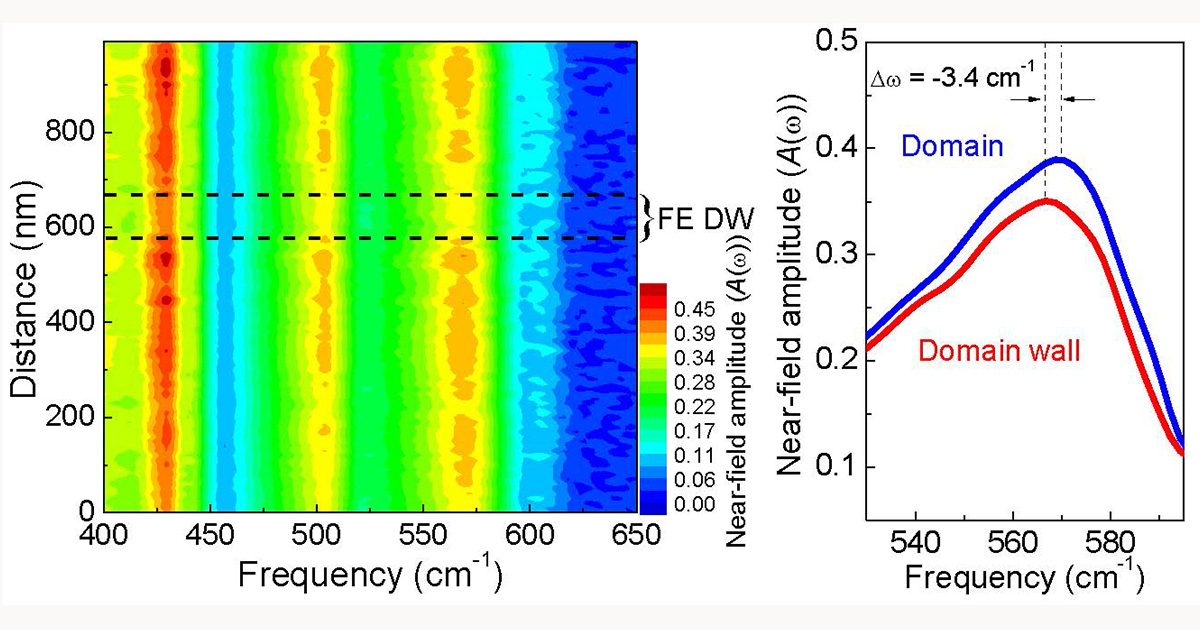
 Smith joined the chemistry department as a graduate student in 2015 and very quickly began investigating domain walls. Domain walls act as the boundaries between regions, or domains, of materials and have the potential to impact the properties and uses of that material.
 “This project really highlights the importance of curiosity in research,” said Musfeldt. “Kevin took an exploratory project and turned it into the most exciting thing in our lab with far-reaching implications.”
 Drake Robins is a fourth-year senior studying analytical chemistry. He is a member of the Air Force ROTC and has been working in Associate Professor Bhavya Sharma’s lab since his junior year. After graduation, Robins will join the United States Air Force and attend Undergraduate Pilot Training. Robins expressed his gratitude for the award and his time at the University of Tennessee.
 Clay West, also a fourth-year senior, is a student in the department’s American Chemical Society certified bachelor’s degree program. He plans to spend the year after graduation applying to graduate schools and preparing to pursue a PhD in organic chemistry. West stated he was grateful to receive the Volunteer of Distinction Award and considers it to be a reflection of the work he has put into earning his degree.
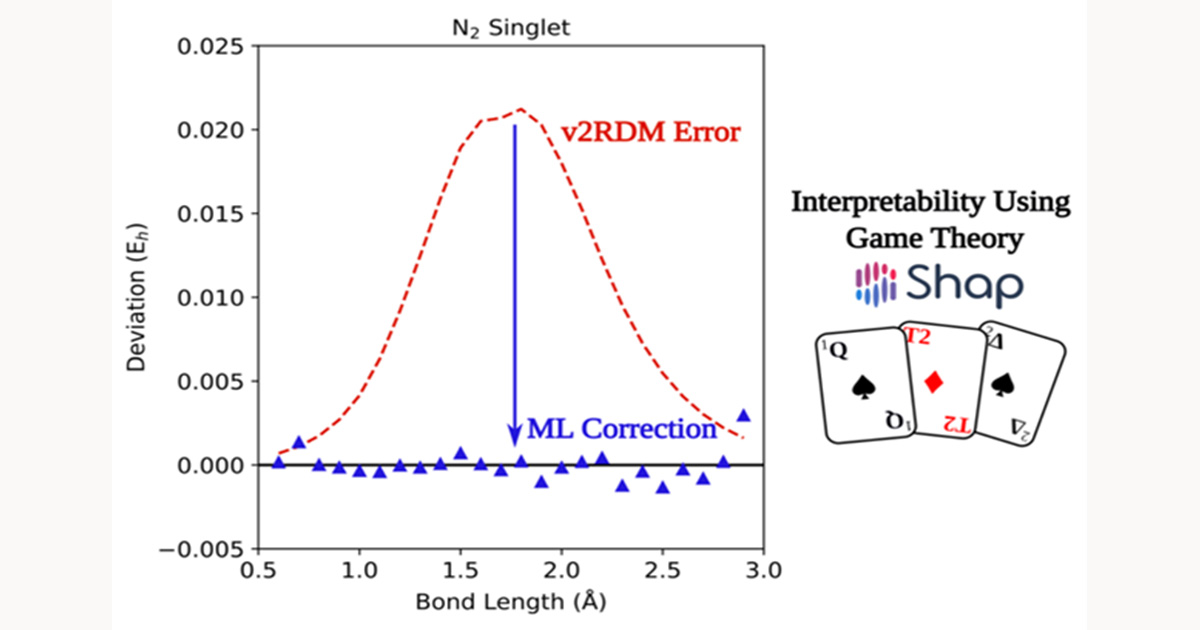
 Grier Jones, fifth year chemistry PhD student, recently won a poster competition at the spring meeting of the American Chemical Society (ACS). His poster, entitled “Exploring the topology of electronic correlation with graph neural networks” earned the NVIDIA GPU Award for Best GPU Poster. The award targets excellent computational chemistry research using a graphical processing unit (GPU).